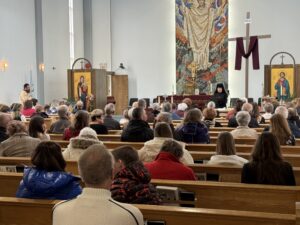
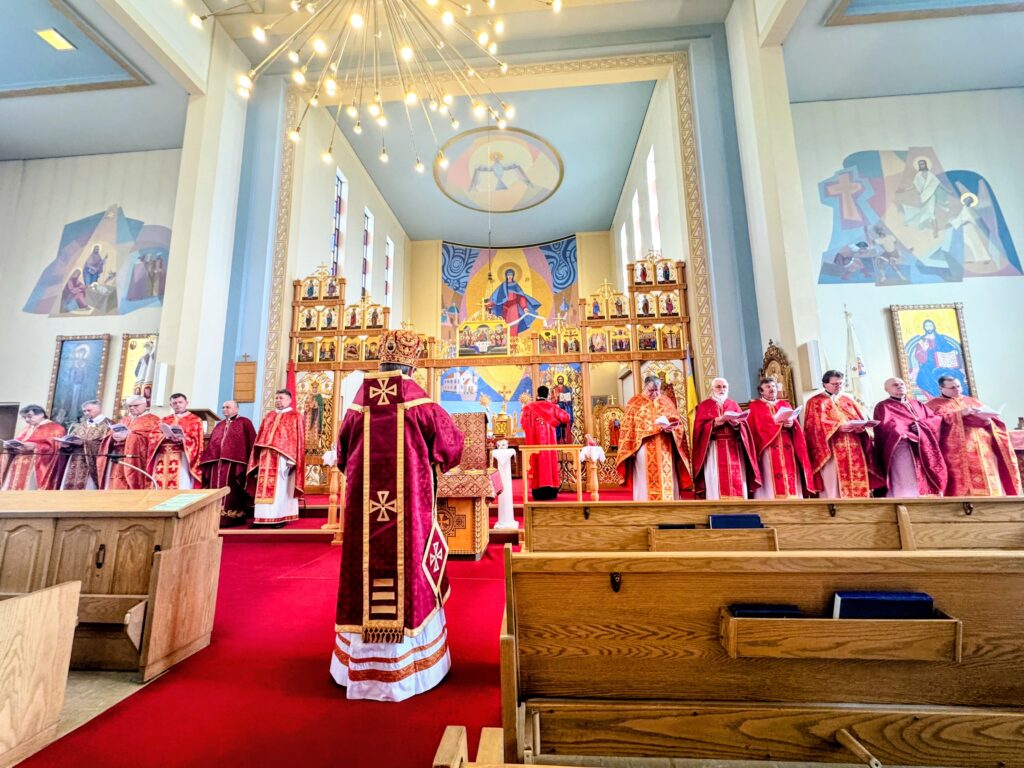
On this Holy Thursday, a special solemnity took place at Blessed Virgin Mary (BVM) Ukrainian Catholic Church in Winnipeg. The faithful, clergy and bishops gathered to commemorate the mystical events of the Upper Room – the Last Supper and the Washing of Apostles’ Feet.
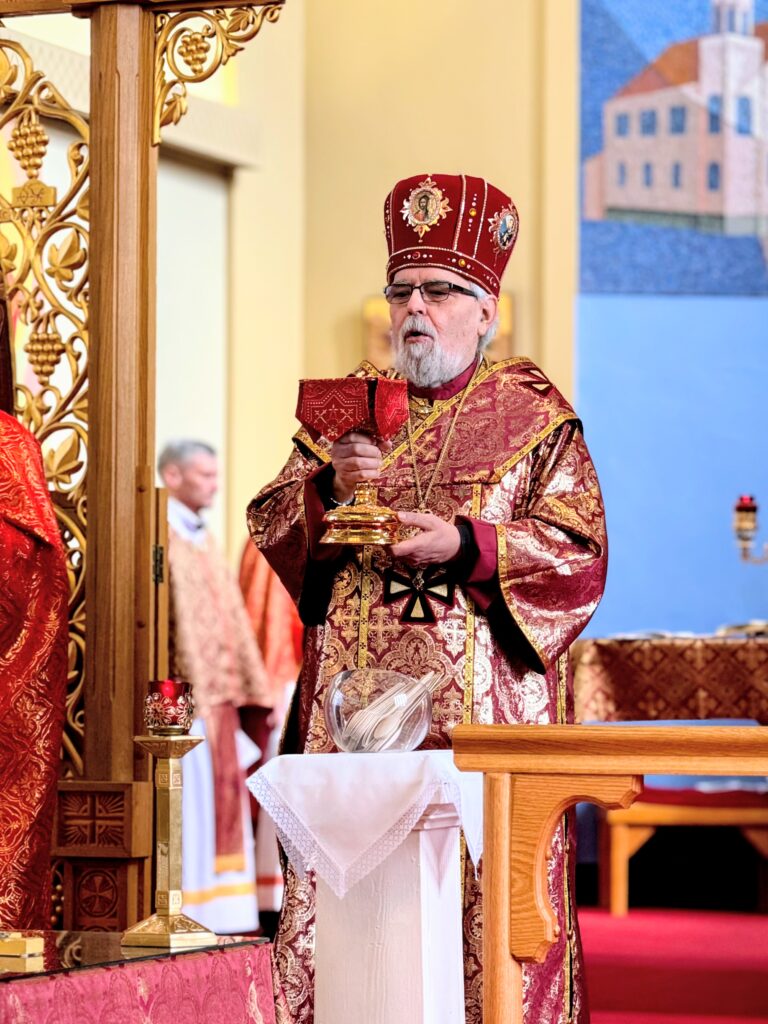
Metropolitan Lawrence Huculak celebrated the Divine Liturgy of Saint Basil the Great, joined at the altar by Bishop Andriy Rabiy and Deacon Ivas’ Babick. Concelebrating alongside them were exactly twelve priests of the Winnipeg Deanery: Fr. Vasyl Hoi, BVM pastor; Fr. Volodymyr Bashutskyy, dean; Fr. Bohdan Lukie, C.Ss.R., Fr. John Sianchuk, C.Ss.R., Fr. Taras Kowch, Fr. Ivan Mostivsky, Fr. Ihor Shved, Fr. Mykhaylo Khomitskyy, Fr. Yaroslav Buduykevych, Fr. Teoktyst Mishchuk, OSBM, Fr. Walter Dudych, and Fr. Stefan Tyrawsky.
This specific number of priests—twelve—served as a living icon of the Apostles gathered around Christ on the night He was betrayed, drawing the present into the eternal reality of the Last Supper.
The Institution of the Eucharist and the Priesthood
Holy Thursday stands as the foundational moment for two inseparable Holy Sacraments: the Holy Eucharist and the Holy Priesthood. In the Ukrainian Catholic tradition, we recall that Christ, the Great High Priest, did not simply replace the Old Testament Passover; He fulfilled it, transforming the Paschal meal into the New Covenant of His own Body and Blood.
As St. John Chrysostom wrote: “It is not man who makes the sacrificial gifts become the Body and Blood of Christ, but he who was crucified for us, Christ himself. The priest stands occupying the place of Christ and pronouncing those words, but the power and grace are of God.”
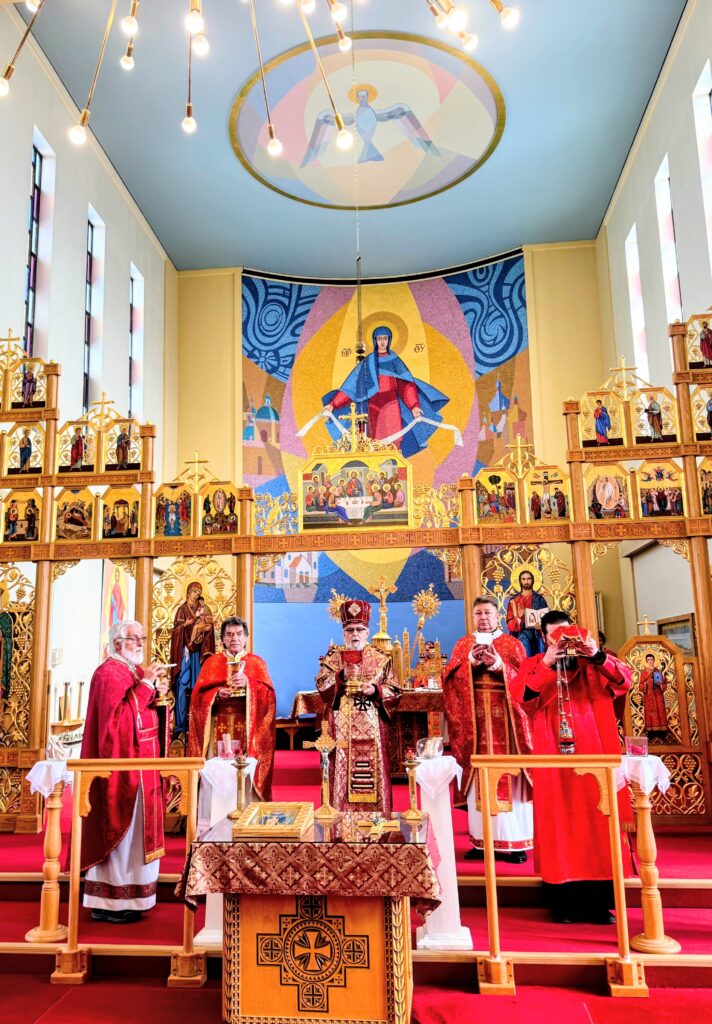
By concelebrating with twelve priests and the deacon, the Liturgy underscored the profound unity of holy orders. The priesthood is never an individual possession, but a participatory sharing in the one eternal priesthood of Jesus Christ. When Metropolitan Lawrence lifted the Holy Gifts, it was a vivid reminder of the anamnesis—the active, liturgical remembering that makes Christ’s sacrifice truly present here and now. The Eucharist sustains the Church, and the priesthood exists to bring that “Bread of Life” to a starving world, while the deacon stands as a vital bridge between the altar and the nave, mirroring the ministering angels.
The Mandatum: The Kenosis of the Washing of Feet
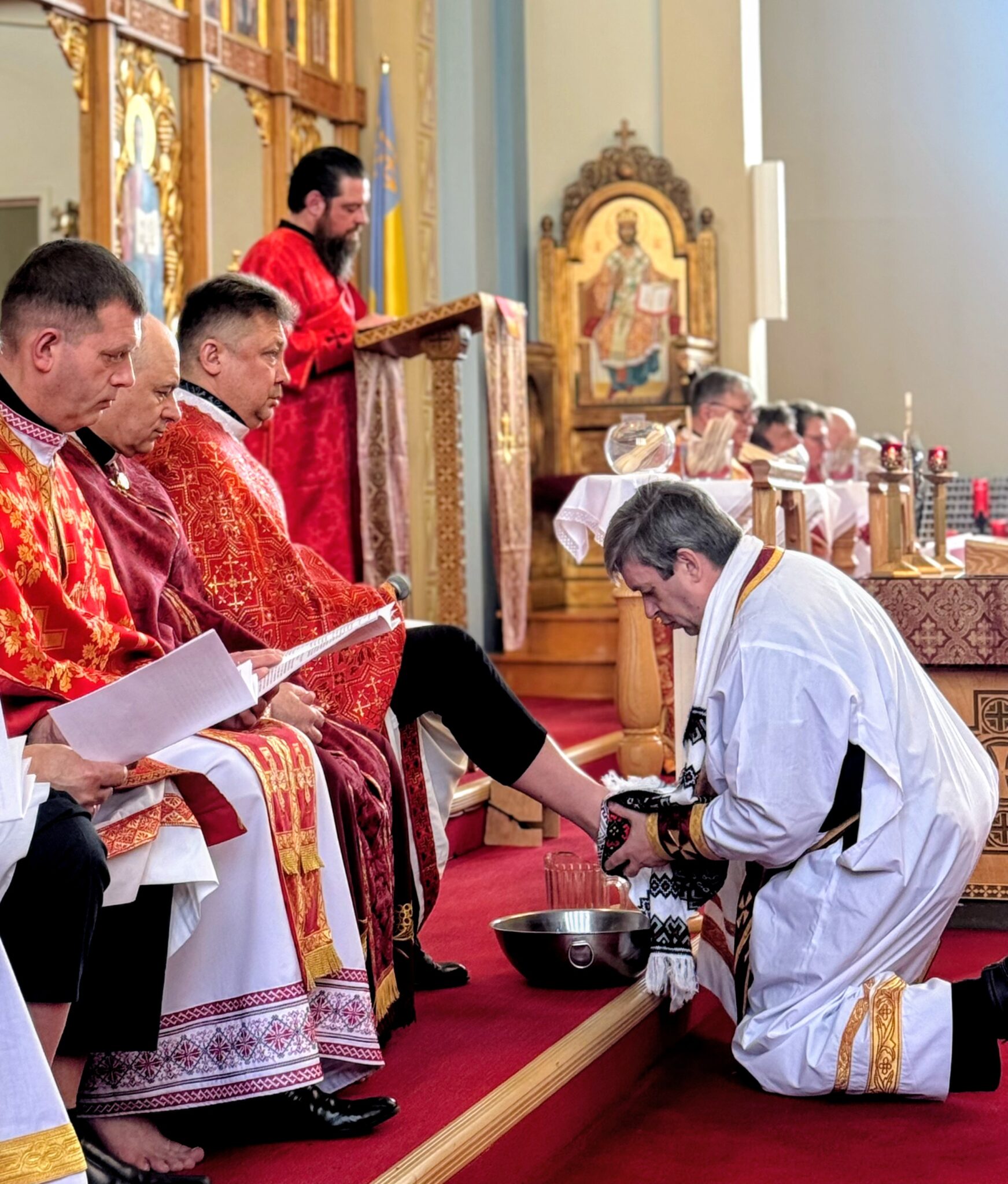
Following the Prayer behind the Ambo, the tone of the service shifted to the radical humility of the Washing of Feet. In a deeply moving reenactment of the Gospel of John, Bishop Andriy Rabiy laid aside his outer vestments, girded himself with a linen towel, and knelt before the twelve priests, with Fr. Vasyl Hoi reverently taking on the role of St. Peter.
This act, known as the Mandatum (the Commandment), serves as the ultimate visual definition of Christian authority. It is a profound display of kenosis—the divine self-emptying of the Son of God, who “emptied himself, taking the form of a servant” (Philippians 2:7). As the Gospel of John records:
“If I then, your Lord and Teacher, have washed your feet, you also ought to wash one another’s feet. For I have given you an example, that you should do as I have done to you.” (John 13:14-15)
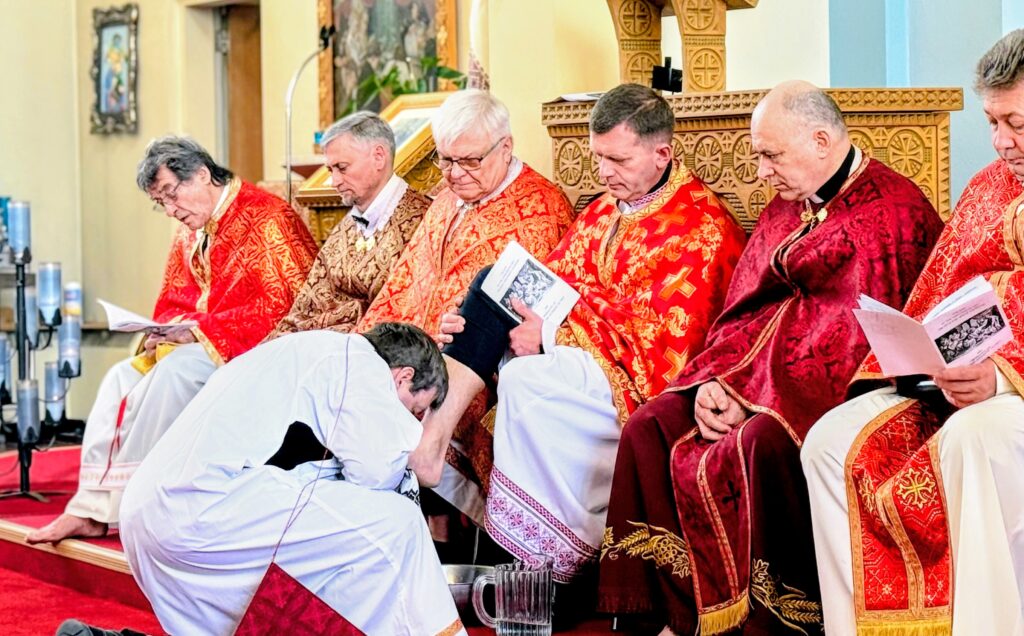
The sight of a successor to the Apostles kneeling on the floor of BVM Church provided a powerful meditation on the true nature of servant leadership. It reminded all present that in the Kingdom of God, the worldly hierarchy is inverted: the greatest is the one who serves the lowest.
A Word of Gratitude to the Clergy
At the conclusion of the services, Bishop Andriy addressed the gathered clergy and the faithful. He offered a heartfelt word of gratitude to the priests and deacon for their tireless dedication and their continued “Yes” to their vocations.
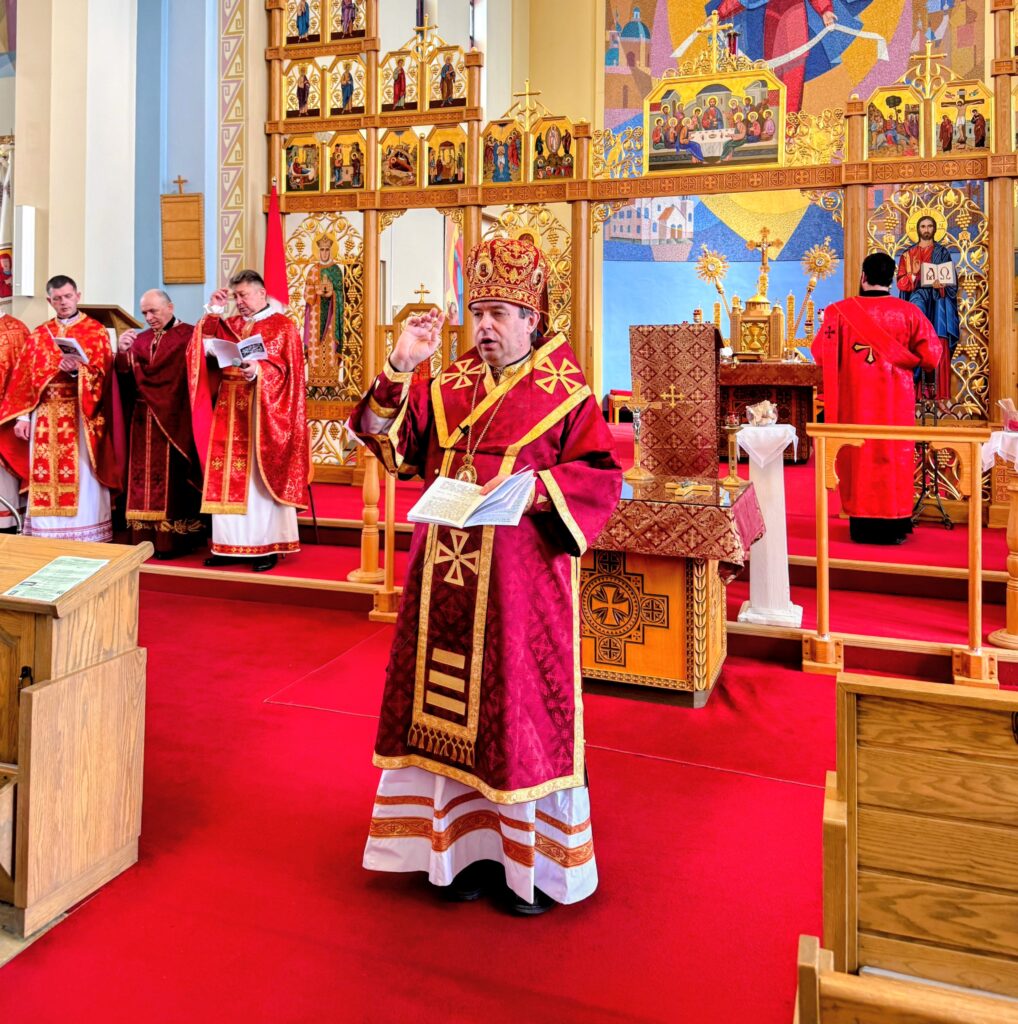
In a world that often overlooks the quiet, daily sacrifices of pastoral ministry, the Bishop emphasized that the clergy’s faithful response to the call to serve is what keeps the light of the Gospel burning brightly in our parishes. He noted that, like the Apostles before them, those in holy orders are called to live dual realities: to be steadfast witnesses to the Resurrection, and compassionate servants to the weary.
Reflection from the Lenten Triodion
The spirit of this holy day is perhaps best captured in the piercing hymnography of the Byzantine tradition, sung in place of the Cherubic Hymn on Holy Thursday:
“At your mystical supper, O Son of God, receive me today as a partaker; for I will not betray the sacrament to your enemies, nor will I give you a kiss like Judas, but like the thief I confess you: Remember me, O Lord, in your kingdom.”
As the clergy and faithful departed the church in silence, entering into the somber anticipation of Great and Holy Friday, the message of the day remained undeniably clear: to receive the Eucharist is to willingly accept the towel of service. The Divine Liturgy at BVM was not merely a historical reenactment, but a profound spiritual renewal for each person.
Department of Communications at the Archeparchy of Winnipeg