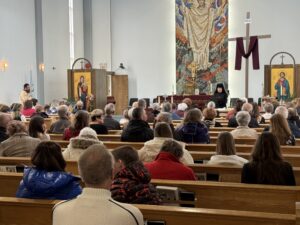
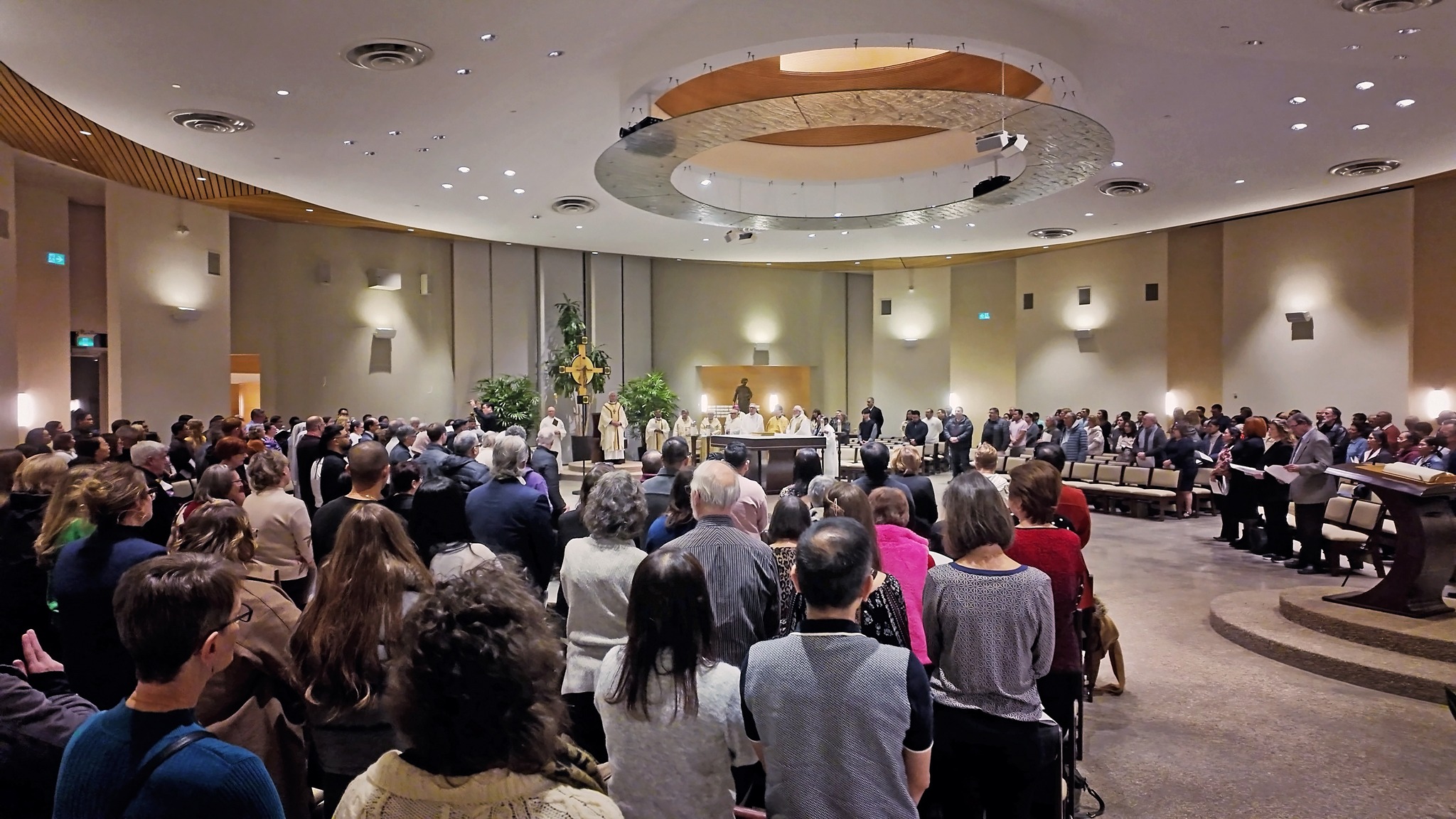
On the evening of Wednesday, February 11, 2026, Archbishops from all four Catholic archdioceses in Manitoba, including Archeparchy of Winnipeg gathered in southwest Winnipeg for a historic and deeply spiritual occasion. Hosted at St. Gianna Beretta Molla Parish, the event marked the province’s first-ever Mass of Appreciation dedicated to acknowledging with gratitude the tireless efforts of healthcare workers and volunteers.
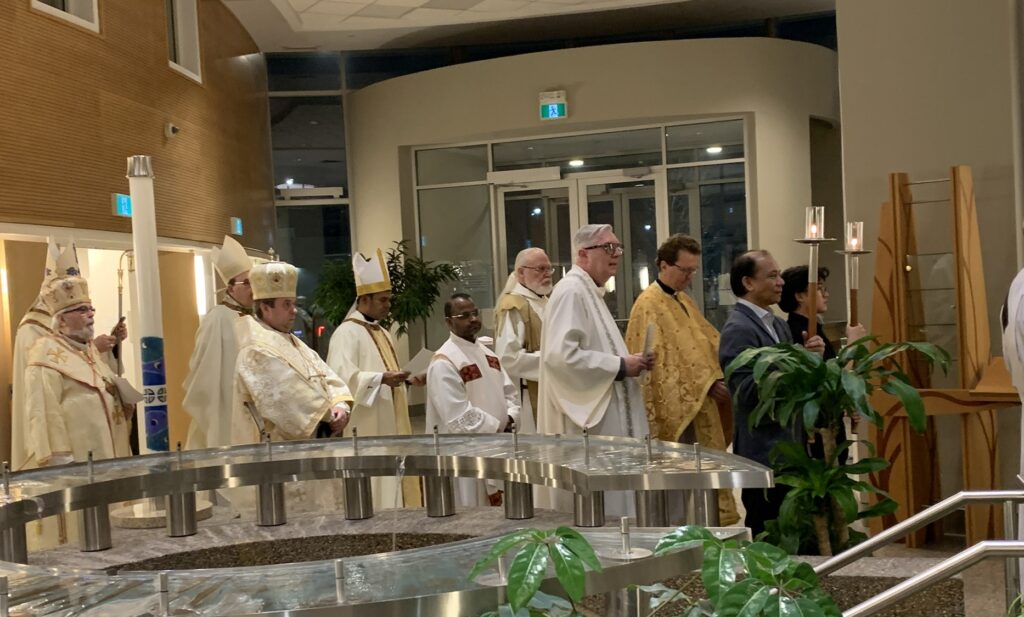
Photo Credit: Archdiocese of St. Boniface
Sponsored by the Catholic Health Care Association of Manitoba (CHAM), the Mass coincided with the 34th World Day of the Sick, a global observance established by Pope John Paul in 1992 to highlight the work of medical professionals and raise awareness of illness. The presiding Archbishop Murray Chatlain (Archdiocese of Winnipeg) together with Archbishops Albert Legatt (Archdiocese of Saint Boniface), Lawrence Huculak (Ukrainian Catholic Archeparchy of Winnipeg), Susai Jesu (Archdiocese of Keewatin-Le Pas) and Bishop Andriy Rabiy (Ukrainian Catholic Archeparchy of Winnipeg) presided over the Mass, sending a unified message of gratitude to the medical professionals and volunteers. They were joined by concelebrating clergy from across the archdioceses, including Fr. Volodymyr Bashutskyy, pastor of Holy Family Ukrainian Catholic parish and dean of the Winnipeg deanery.
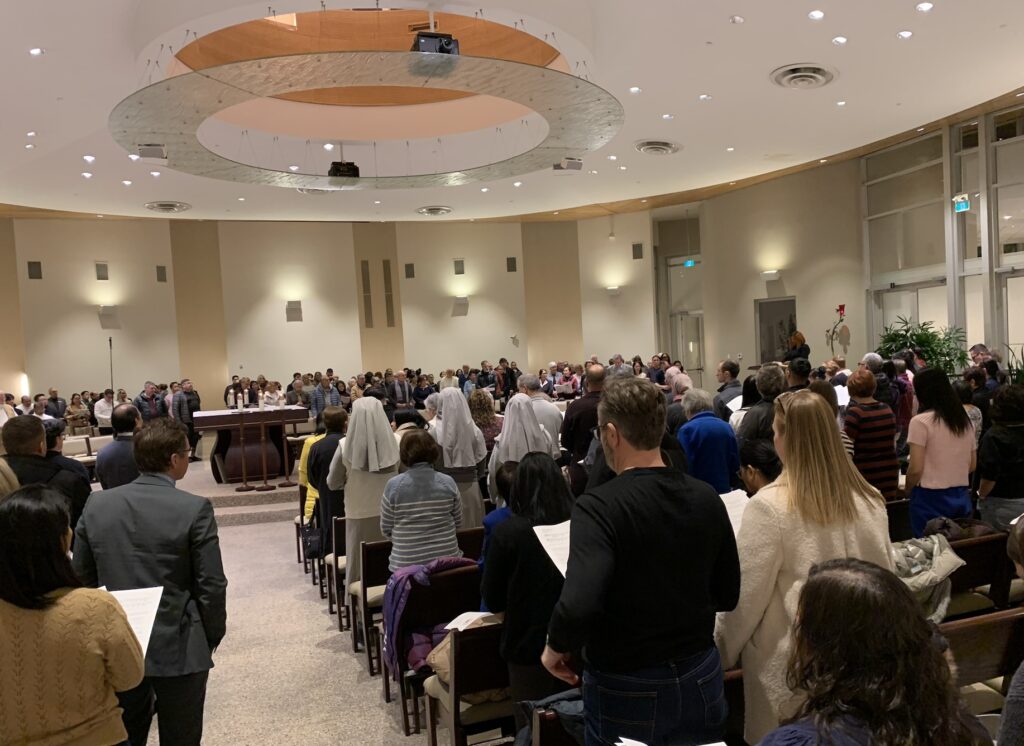
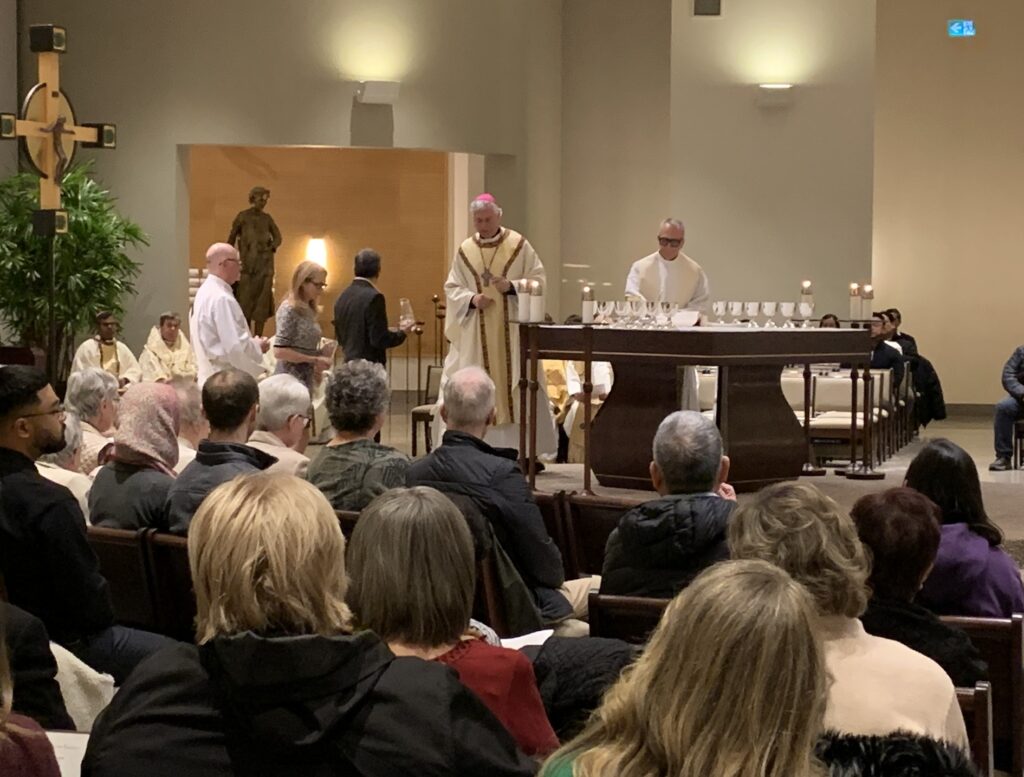
Photo Credit: Archdiocese of St. Boniface
Auxiliary Bishop Andriy Rabiy delivered a moving homily, recognizing the immense pressure and expectations placed on medical staff. He praised them as “agents of mercy” who frequently battle burnout while enduring double shifts and overcrowded hospital hallways.
Reflecting on the Gospel of the Good Samaritan, Bishop Andriy noted that the modern medical world is often plagued by a “culture of speed, immediacy, and haste,” a concept highlighted in a message from Pope Leo XIV. In this fast-paced environment, Bishop told the workers that they are, if one may say, rebels. By giving the sick their time and attention, they break the “cycle of indifference” and bring God’s touch into the clinical sphere.
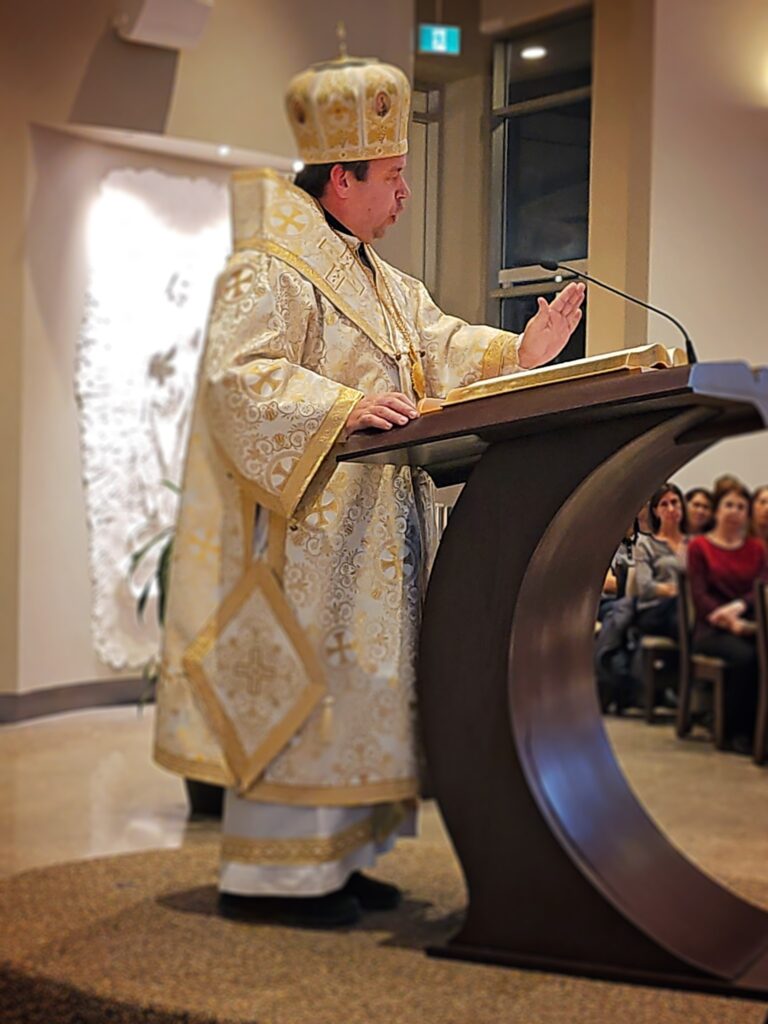
Photo Credit: Catholic Health Association of Manitoba
To illustrate this, Bishop Andriy shared a deeply personal story of his own hospitalization in April 2021. While suffering from a severe case of COVID-19 in a Pennsylvania hospital, his blood thinners caused exhausting, continuous nosebleeds. One late evening, a Nigerian religious Sister working as a nurse that evening gently offered him a sponge bath to wash dried blood stains, a change of bed linens, and administered nasal drops. After several sleepless nights, he recalled feeling much needed relief and falling asleep quickly. Her tender care was a turning point in his recovery, proving that while machines and pharmacology are blessings, it is the human touch that provides true comfort.
Finding Solace in Faith: A Guide for Critical Moments
Later in the evening, Bishop Andriy introduced a newly released pastoral letter on end-of-life issues titled Finding Solace in Faith. The bishops of Manitoba issued this document to provide a comprehensive guide for Catholics and all people of good will in Manitoba recognizing the fact that in critical medical moments, patients, families, and professionals often face agonizing choices. This letter was drafted to serve as a steadfast moral compass to navigate these complexities according to the Catholic faith, emphasizing that human life must always be treated with profound dignity and respect because it is inherently sacred.
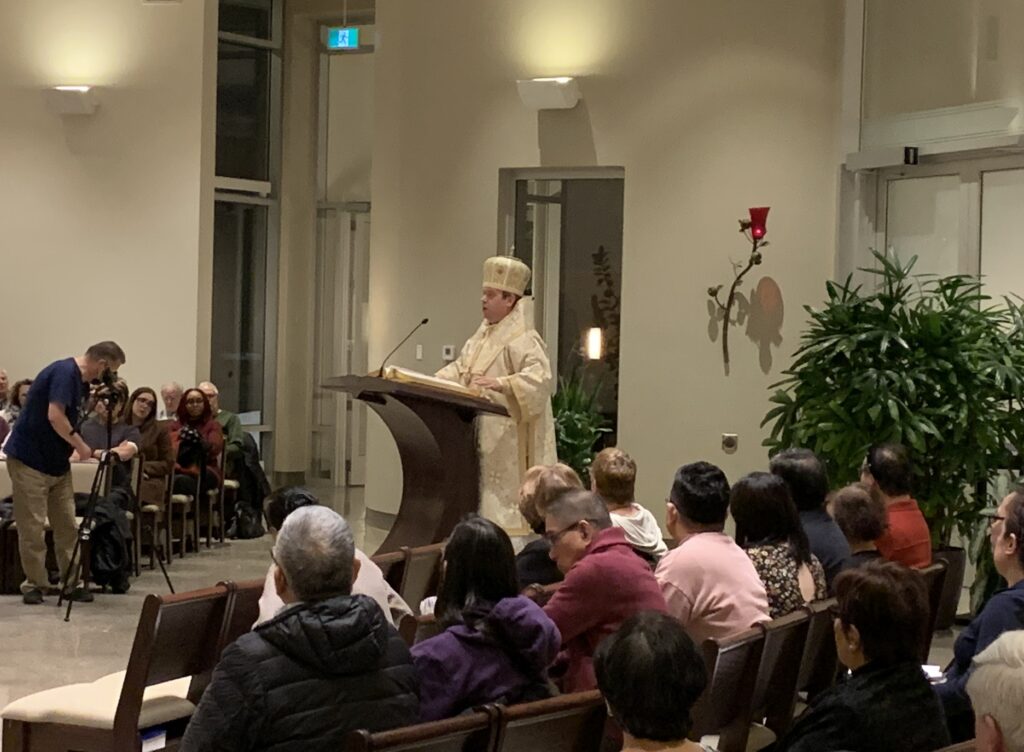
Photo Credit: Archdiocese of St. Boniface
The presentation outlined several core Catholic bioethical principles to guide these decisions:
- Life is Not a Commodity: Human life must never be treated as an asset to manage or a broken tool to discard when it stops generating utility.
- The Sacred Vessel: Drawing on St. Paul’s letter to the Corinthians, the bishop emphasized that the human person does not merely have a body, but is a body—one that serves as a sacred Temple of the Holy Spirit.
- Palliative Solidarity: The Church rejects both “therapeutic obstinacy” (forcing the body to live through extraordinary, disproportionate means) and euthanasia (forcing the body to die prematurely). Instead, it calls for a middle path of walking with the patient, controlling pain, and allowing the natural process of death to unfold. To support this path, the Catholic bishops fully support palliative care and strongly advocate for its robust availability throughout all of Manitoba, emphasizing the critical need for access including in the province’s northern communities.
“We do not abandon the temple when it crumbles,” Bishop Andriy declared, urging medical professionals to stand vigil, wash, feed, and pray with the dying, affirming that fragile life remains holy ground.
Ultimately, the Church’s message to the gathered professionals was one of spiritual elevation. Their daily work is not merely clinical; it is an “authentic ecclesial action.” As Bishop Andriy concluded, “When you bandage a wound, that is a sacrament of mercy… Your work is a liturgy.”
A Blessing of Hands and Hearts
Another profound highlight of the evening occurred when the Archbishops offered a special prayer and a solemn blessing upon all the doctors, nurses, clinical staff, and volunteers present. They prayed for God to protect them from the heavy weight of hardships, to renew their physical and spiritual strength, and to anoint their hands as instruments of divine healing.
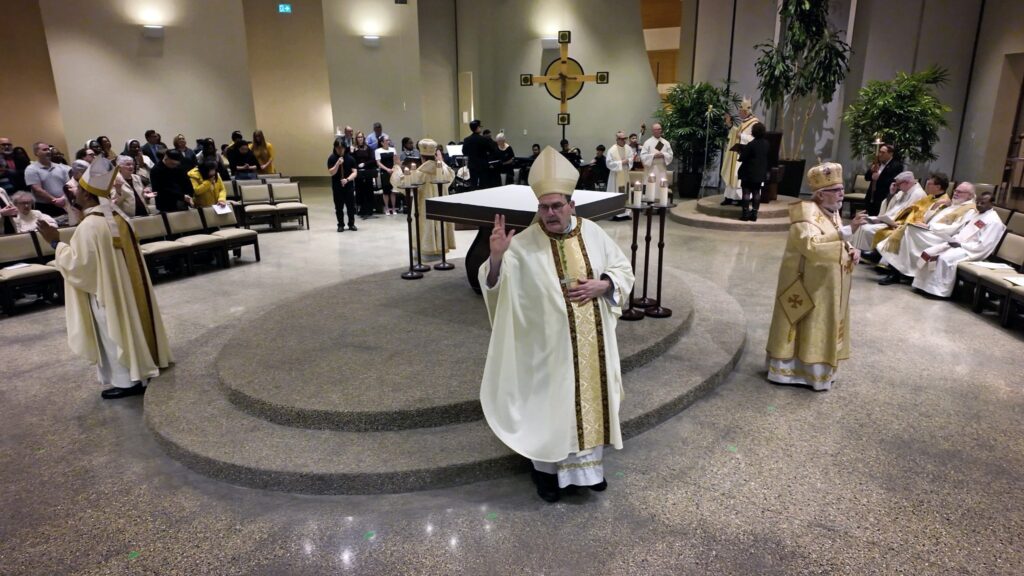
Photo Credit: Catholic Health Association of Manitoba
CHAM CEO Gladys Hrabi summarized the evening’s importance, noting that the profound moment of “blessing the hands and hearts” of those working under tremendous pressure, and the presence of all the Archbishops sent a powerful signal of gratitude, support and solidarity.
Moved by the profound experience of the Mass, many clergy and medical workers expressed a strong desire to make this appreciation an annual tradition.
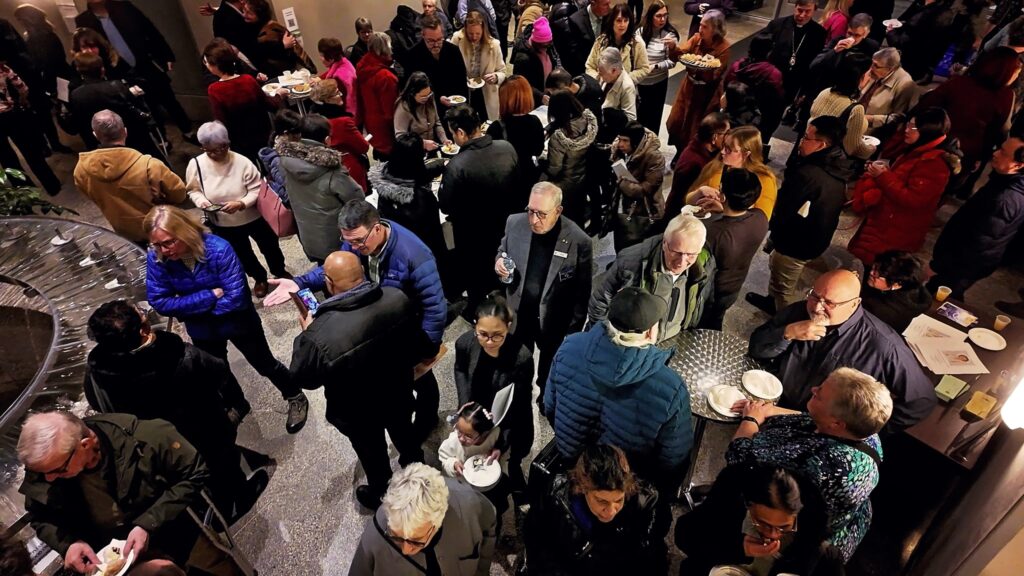
Photo Credit: Catholic Health Association of Manitoba
Long after the service ended, its impact endures. Doctors, nurses, and volunteers will return to their posts empowered by the gratitude of both Church and community, carrying a renewed spiritual strength to sustain their vital ministry of healing to their neighbor.
Department of Communications of the Archeparchy of Winnipeg